Internet Penetration and RSP's Success in Nepal's 2082 Election — A Quick Correlation Look
Internet Penetration vs RSP Winning Districts — Are They Really Correlated?
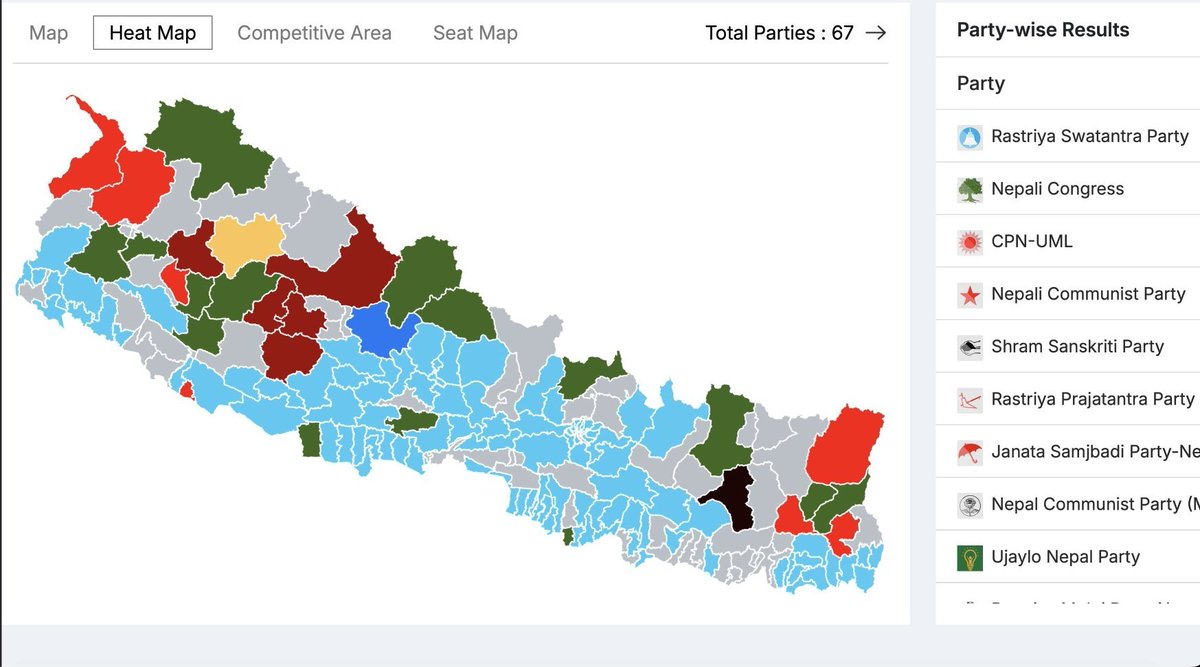
(One of the visuals from the original tweet — districts with higher access/usage rates tended to lean RSP)
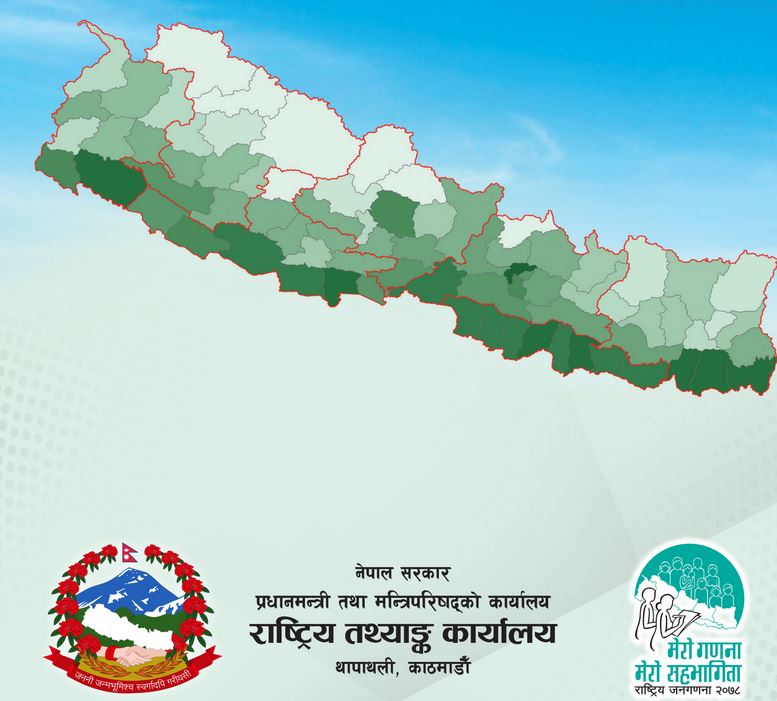
(District-level map overlay highlighting RSP wins and internet metrics)
A few days after Nepal's 2082 BS election results started rolling in, one pattern jumped out: Rastriya Swatantra Party (RSP) — led by figures like Balendra Shah — performed noticeably stronger in more connected, urban-leaning districts.
I quickly pulled together district-level data on internet penetration (both access and usage rates, sourced from recent NTA/telecom reports) and overlaid it with RSP's winning/leads performance. The short tweet version:
"Internet Penetration [Access and Usage] rate vs #RSPNepal wining district are correlated."
— my original tweet on March 8, 2026
But let's unpack it properly here.
The Observation
- Districts with higher internet penetration (above ~50–60% household access or active usage) showed a clear tendency for RSP to win or lead significantly.
- Lower-penetration rural/mountain districts leaned more toward traditional parties (NC, UML, Maoist Centre, etc.).
- RSP's messaging — anti-establishment, youth-focused, digital-native — seems to have resonated where people actually spend time online.
This isn't shocking in 2026. Nepal's youth bulge + last year's protest wave (fueled heavily by social media) created fertile ground for a party that lives on platforms like X, TikTok, and Facebook.
Quick Data Notes
- Internet data: Approximate district averages from Nepal Telecommunications Authority (NTA) reports and telecom operators ( NTC, Ncell ) — latest available pre-election snapshots.
- Election data: Early/final counts from Election Commission of Nepal (as of early March 2082 BS). RSP led/won in many Kathmandu Valley seats, Pokhara, urban Tarai spots, and some surprising hill districts.
- Viz type: Simple scatter plot (x = internet penetration %, y = RSP vote share or binary win/loss) + choropleth map for spatial view.
Correlation visually looks positive — districts cluster in the upper-right quadrant.
Important Caveats (Correlation ≠ Causation!)
Don't get too excited yet. This is a quick exploratory look, not rigorous stats. Real confounders include:
- Urbanization — high-internet districts are almost always more urban → higher education, income, youth density → all predict RSP support anyway.
- Education & English exposure — correlates strongly with internet use and with openness to new/anti-establishment parties.
- Age demographics — RSP is often called the "Gen Z party". Younger voters are both more online and more likely to back RSP.
- Social media campaigns — RSP (and independents like Balen) mastered digital outreach; older parties lagged.
- Sample size — Nepal has 77 districts; many have small margins or mixed results.
A proper analysis would run multivariate regression (controlling for urban %, literacy, age, etc.) and compute Pearson/Spearman r with p-values. My back-of-envelope guess: raw correlation probably 0.4–0.7, but drops after controls.
Why This Matters
If internet access really amplifies newer parties:
- Digital divide = political divide.
- Future campaigns will be even more online-heavy (AI deepfakes already appeared in 2082!).
- Traditional parties may need to seriously invest in digital strategy or risk being left behind.
RSP's rise shows how connectivity can reshape politics — especially in a young, digitally awakening country like Nepal.
Next Steps / Your Turn
I already built a small public dashboard for Nepal election exploration:
👉 https://rockerritesh-electionnepal.hf.space (DM for creds if needed)
Would love to hear from you:
- What other variables should I correlate (youth unemployment? Protest participation? Migration rates?)?
- Got better/cleaner data sources?
- Thoughts on whether this pattern holds in future by-elections or 2084?
Drop a comment or hit me up on X: @Rocker_Ritesh
Thanks for reading — more data dives coming soon!
#NepalElection2082 #RSPNepal #DataMeetsPolitics
Published: March 8, 2026
Data/Analysis by Sumit Yadav — ML Researcher & AI Engineer
📚 How to Cite This Post
BibTeX
@article{yadav{{ page.date | date: "%Y" }}{{ page.title | slugify | replace: '-', '' }},
    title = {Internet Penetration and RSP's Success in Nepal's 2082 Election — A Quick Correlation Look},
    author = {Sumit Yadav},
    journal = {Tatva},
    year = {{{ page.date | date: "%Y" }}},
    month = {{{ page.date | date: "%B" }}},
    day = {{{ page.date | date: "%d" }}},
    url = {https://tatva.sumityadav.com.np/posts/2026/03/08/Internet-Penetration-and-RSPs-Success/},
    note = {Accessed: {{ site.time | date: "%B %d, %Y" }}}
}
APA Style
Yadav, S. ({{ page.date | date: "%Y, %B %d" }}). Internet Penetration and RSP's Success in Nepal's 2082 Election — A Quick Correlation Look. ." Tatva, {{ page.date | date: "%d %b %Y" }}, https://tatva.sumityadav.com.np." Tatva. {{ page.date | date: "%B %d, %Y" }}. https://tatva.sumityadav.com.np/posts/2026/03/08/Internet-Penetration-and-RSPs-Success/.
Note: This citation format is automatically generated. Please verify and adjust according to your institution's specific requirements.